Blog

Featured in Renfe Club Magazine: Manises, the Heart of Wise Ceramics

Some news arrives by email. This one arrived by train.

Renfe, Spain’s national railway, publishes a magazine for the members of its Club Renfe frequent-traveller programme — a magazine that goes out to the people who criss-cross Spain by high-speed rail. And in its section Merece un viaje — “It deserves a trip” — the current issue dedicates its pages to our city: “Manises, el corazón de la sabia cerámica” — Manises, the heart of wise ceramics — with text by Mario Suárez.

You can read the original article here: “Manises, el corazón de la sabia cerámica” — Revista Club Renfe (in Spanish).

And there, in the middle of the story of Manises, is our house.
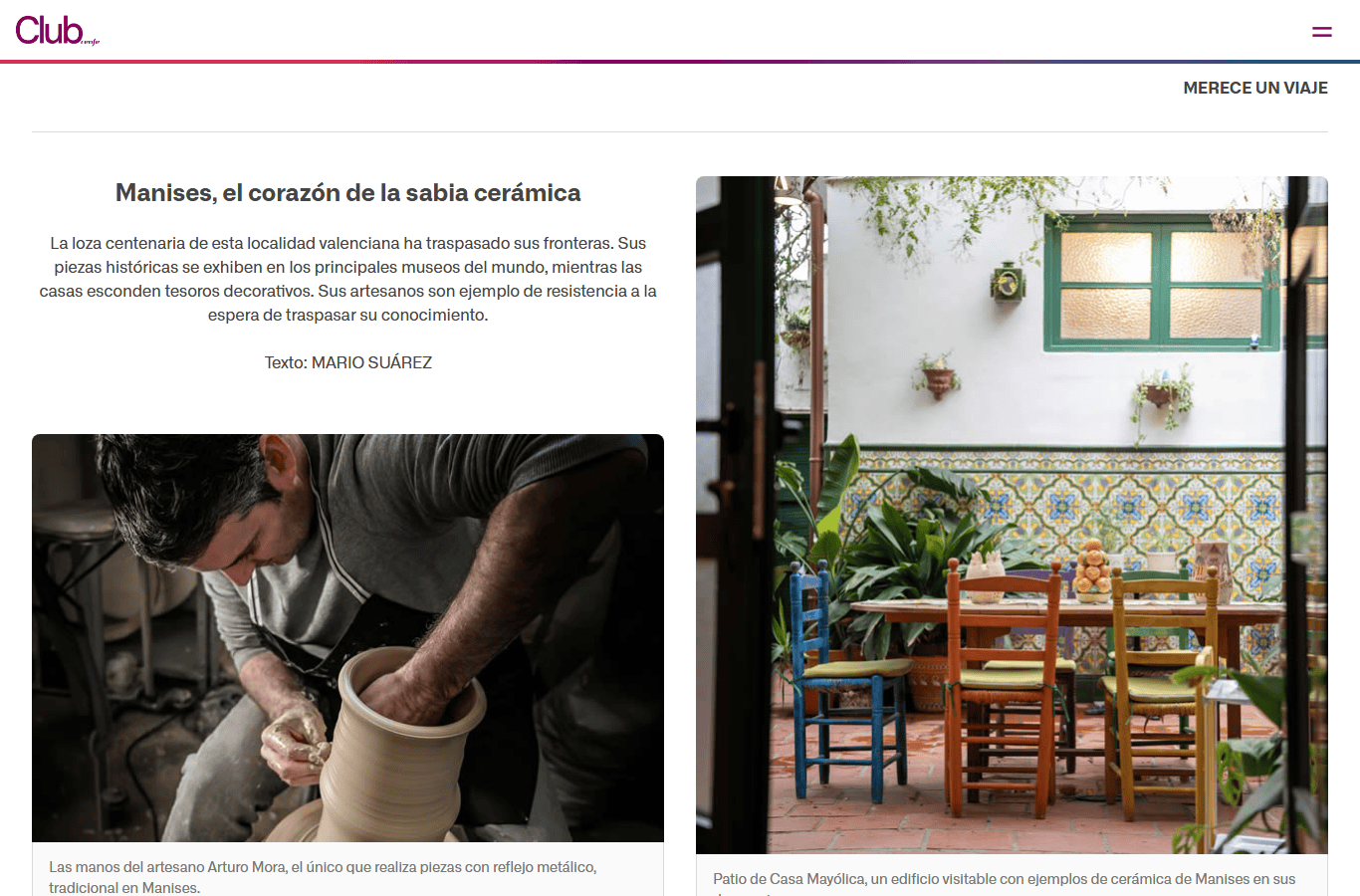
Screenshot of the Renfe Club magazine article headline "Manises, el corazón de la sabia cerámica" in the Merece un viaje section
The headline in Revista Club Renfe — screenshot: Revista Club Renfe

The company our city keeps

The article opens with the company Manises keeps: pieces of its golden-lustre ceramics — the most celebrated of late-medieval pottery, brought here by Andalusí potters in the early 14th century — are built into the walls of the Papal Palace of Avignon and the Monastery of El Escorial. You can find Manises ware in the Louvre, the Victoria & Albert and the Metropolitan Museum.

Closer to home, the piece visits the Museo de Cerámica de Manises, where director Teresa Segura explains that auction houses around the world sell Manises pieces for two to four hundred thousand euros — and call the museum to certify where they came from. It covers the Bienal Internacional de Cerámica de Manises, which just held its 17th edition with a record 486 works by 345 artists and designers from 49 countries. And it names the ten artisan workshops still active in town, from Arturo Mora and his metallic lustre to the Fábrica La Cerámica Valenciana of José Gimeno.

This is the neighbourhood our house lives in. Not metaphorically — literally. Carrer de Sant Joan, twenty minutes from Valencia, in a city that has been shaping, painting and firing clay for seven centuries.

What they wrote about the house

The article tells the story of how we found Casa Mayólica three years ago, looking for an iconic place to live — and found a 150-year-old villa in the very centre of Manises, whose last owners were the Mora family, one of the historic ceramic dynasties of the city. From the bathrooms to the patio, the journalist writes, the house is an homage to Valencian loza and its past: modernist Nolla mosaics, centuries-old ceramics in cobalt blue.
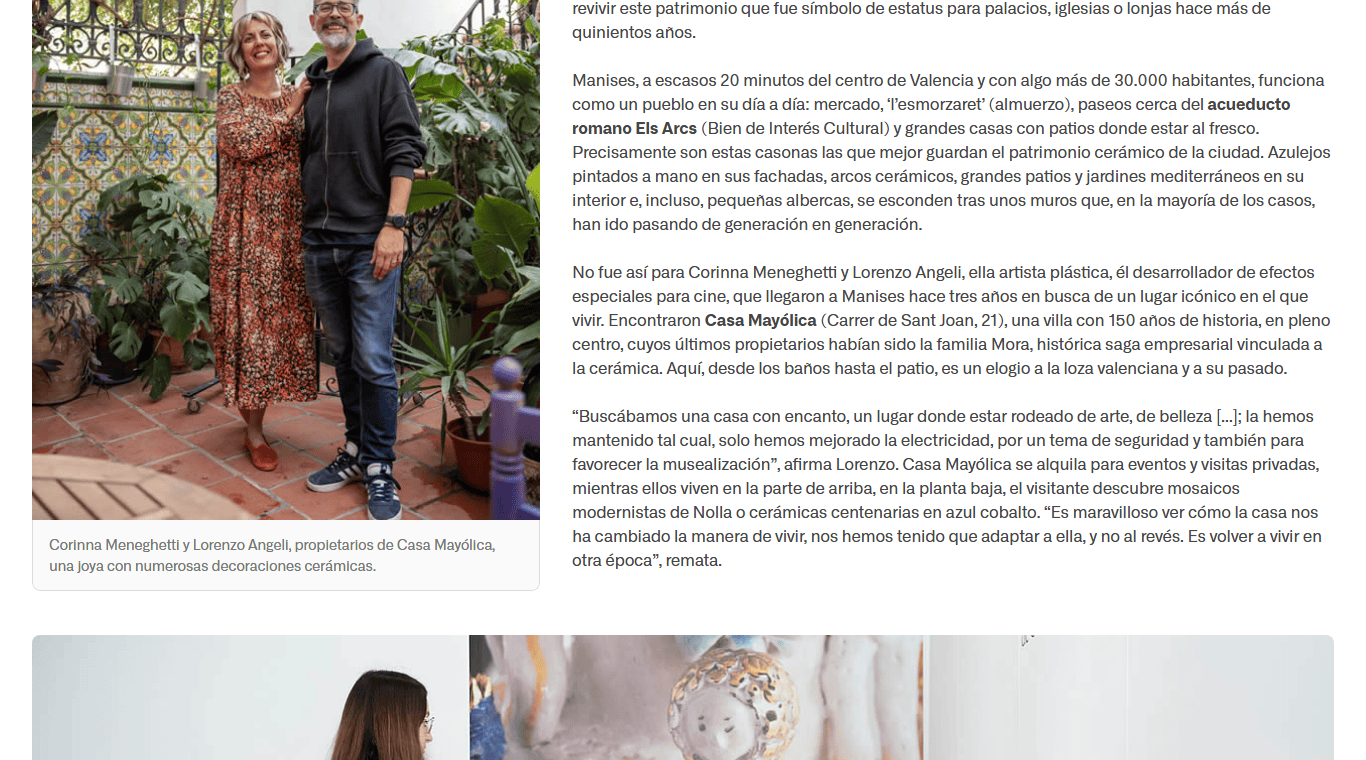
Screenshot of the Renfe Club magazine article paragraph about Casa Mayólica, with a photo of the house patio
The article’s feature on Casa Mayólica — screenshot: Revista Club Renfe

The piece quotes Lorenzo on what it means to live here:

“We were looking for a house with charm, a place to be surrounded by art, by beauty… We’ve kept it just as it was — we’ve only renewed the electricity, for safety, and to help the house work as a museum.”

“It’s marvellous to see how the house has changed the way we live. We had to adapt to it, not the other way round. It’s like living in another era.”

That has always been our feeling about the house — that we didn’t renovate it, we joined it. It’s gratifying when a national publication sees it the same way.
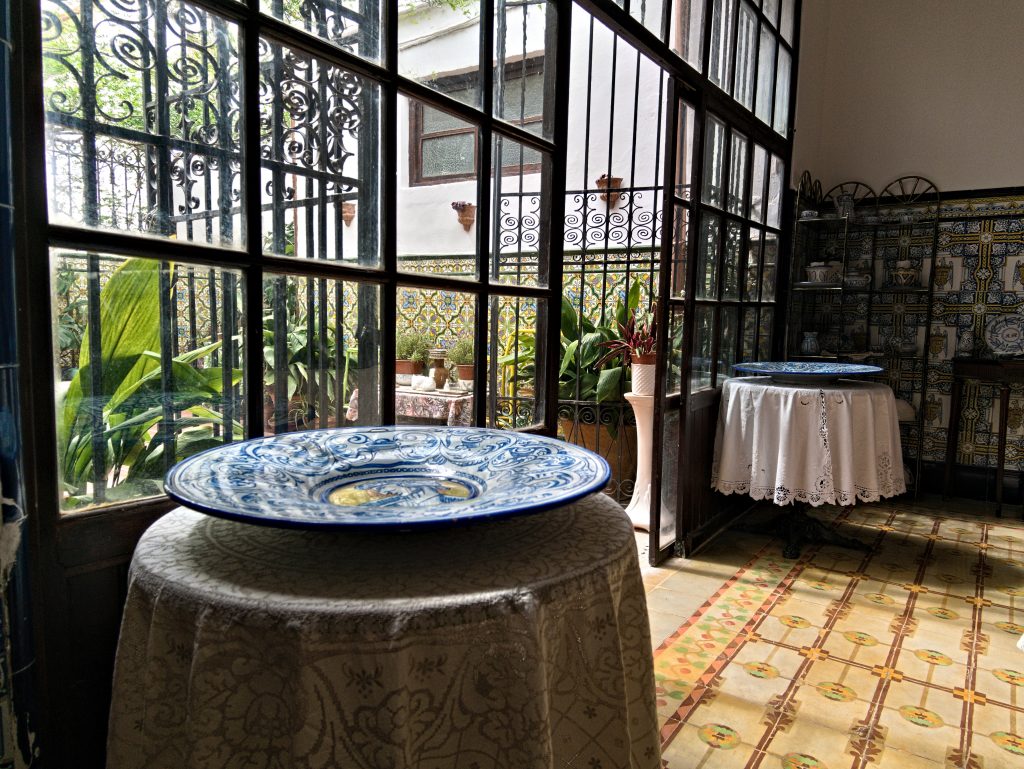
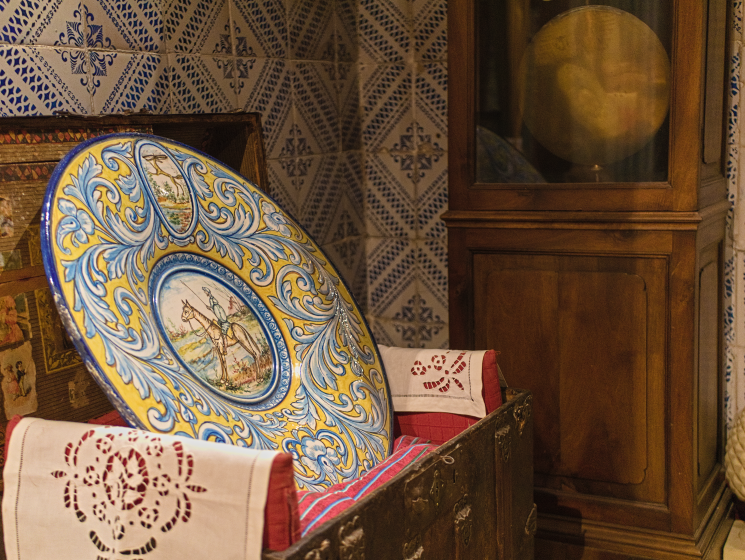
Blue ceramic plate displayed in the glass gallery of Casa Mayolica
Cobalt blue in the glass gallery — the article describes “centuries-old ceramics in blue cobalt” on the visitor floor

Why this matters to us

Being featured in a travel magazine aimed at train travellers says something specific: Manises is no longer only a day trip for ceramic specialists. It is being written up, alongside Valencia, as a destination — a place you point a high-speed train at.

We’ve felt that shift ourselves. Visitors arrive from the Ceràmica Oberta route, from design and architecture circles, from film crews scouting centuries-old interiors. Now the Club Renfe magazine tells its readers the same thing we tell every guest: the house, the museum, the workshops, the market — this city deserves a trip.

Getting here (the article’s own advice)

The magazine closes with a practical box — Mejor si vas en tren (“Better if you go by train”): València is connected to Madrid by 15 daily high-speed trains, with direct AVE services from Castilla y León and Andalucía, and Euromed trains along the coast from Catalonia and Alicante. From Valencia, Manises is a short metro or taxi ride away — get off at Manises station and Carrer de Sant Joan is a five-minute walk.
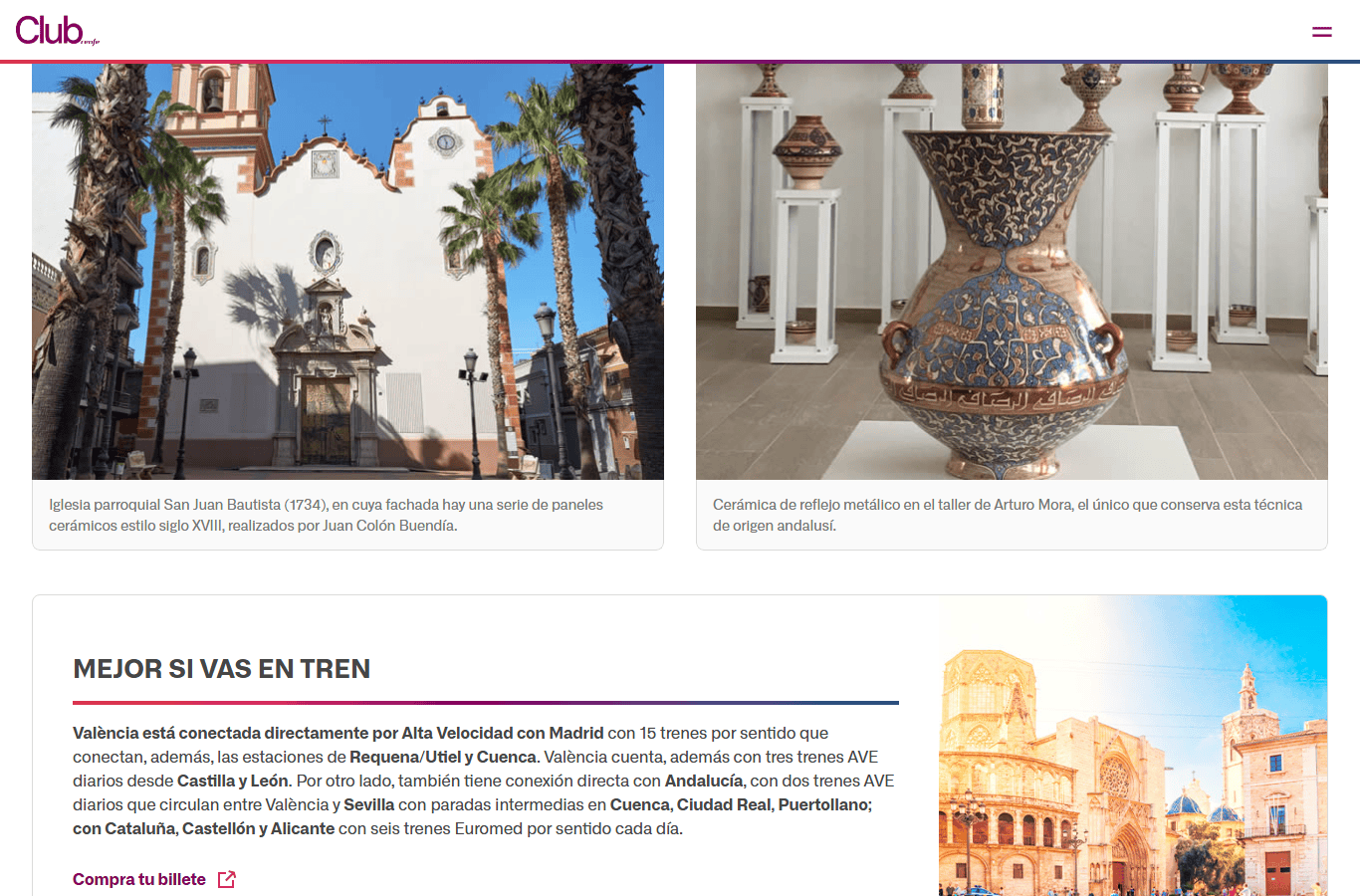
Screenshot of the "Mejor si vas en tren" box in the Renfe article listing high-speed train connections to Valencia
The article’s travel box — screenshot: Revista Club Renfe

We confess we like the framing. The house is 150 years old; the train that brings you here is a little younger. Both will get you here in comfort.

Come and see the house they wrote about

The house opens for private visits through The Experience, for public events — where the little ceramic market opens alongside — and the House Museum can be visited on request. Read about the house or contact us to arrange a visit.


Casa Mayolica — Carrer de Sant Joan, Manises, City of Ceramic Where history meets hospitality — and now, where the railway magazine sends its readers.

Internal links: /the-experience/ · /public-events/ · /little-ceramic-market/ · /house-museum/ · /about/ · /contact/
Ceràmica Oberta 2026: What Happened When 150 People Walked In

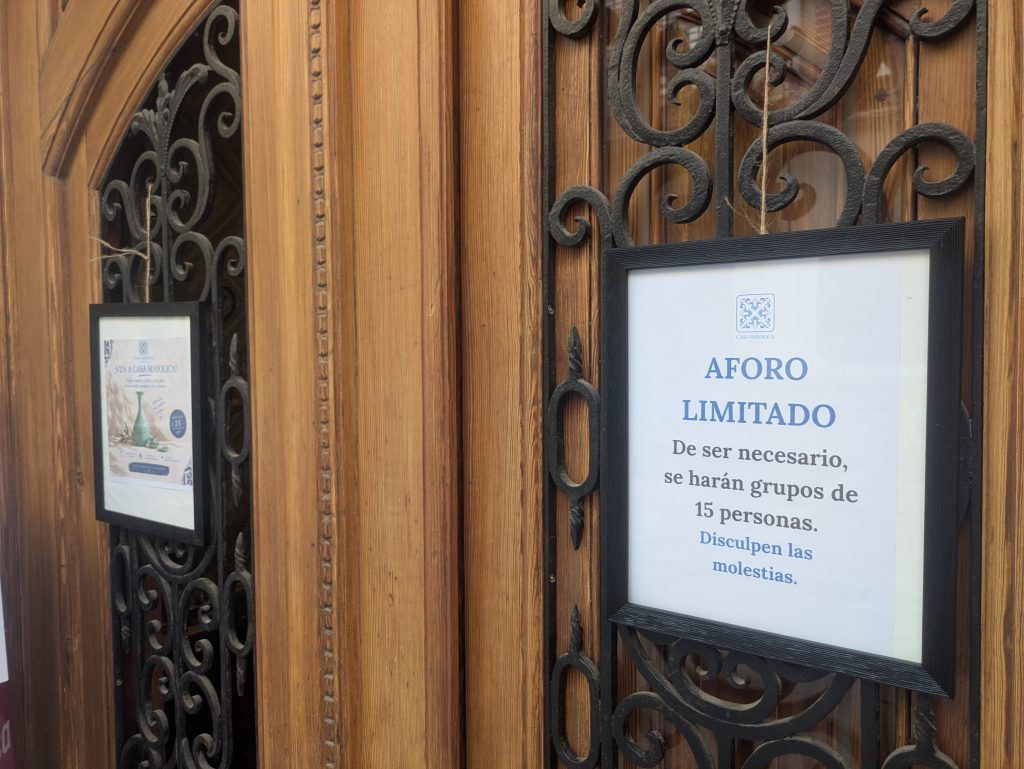
The sign we hung on the door said groups of fifteen, maximum. We honestly didn’t know if we’d need it.

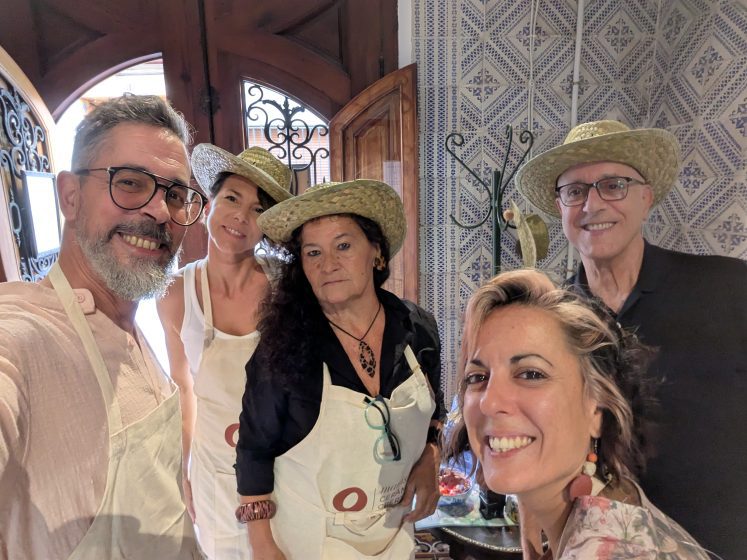
By early afternoon we had counted, recounted, and stopped counting at 150 visitors — in a house that, for most of its 154 years, hosted one family at a time.

Entrance door of Casa Mayolica with wrought iron scrollwork and a sign asking visitors to enter in groups of fifteen people
The door sign: groups of fifteen. By mid-morning we knew we would need it.

The day, in numbers

Ceràmica Oberta is Manises’ open-doors day: workshops, studios, factories and historic houses open their doors and the city turns into a ceramic route. This was the fifth edition, and Casa Mayolica was on the map as one of the heritage stops — the 1872 house with mayolica on the walls and underfoot.

Our doors opened with the official hours, 10:00–14:00 and 17:00–20:00. Visitors came through in groups of fifteen, as the sign promised. One hundred and fifty people, ten-odd groups, one house built in 1872. The floors are fine.

Who came

Two crowds we hadn’t expected in this proportion, and both were a gift.

People from everywhere. The passport of stamps that the organisation hands out on Calle Torrent brought travellers off the tourist train and down our street — visitors from across Spain and from well beyond it, different languages in the patio all day, cameras pointed at ceilings.

People from Manises. This is the part that got us. Neighbours who have walked past Carrer de Sant Joan for decades — who knew the house only as “that façade” — came in to see what the fuss was about. A house can live in the middle of a city and still be a secret to its own city. Yesterday, less so.

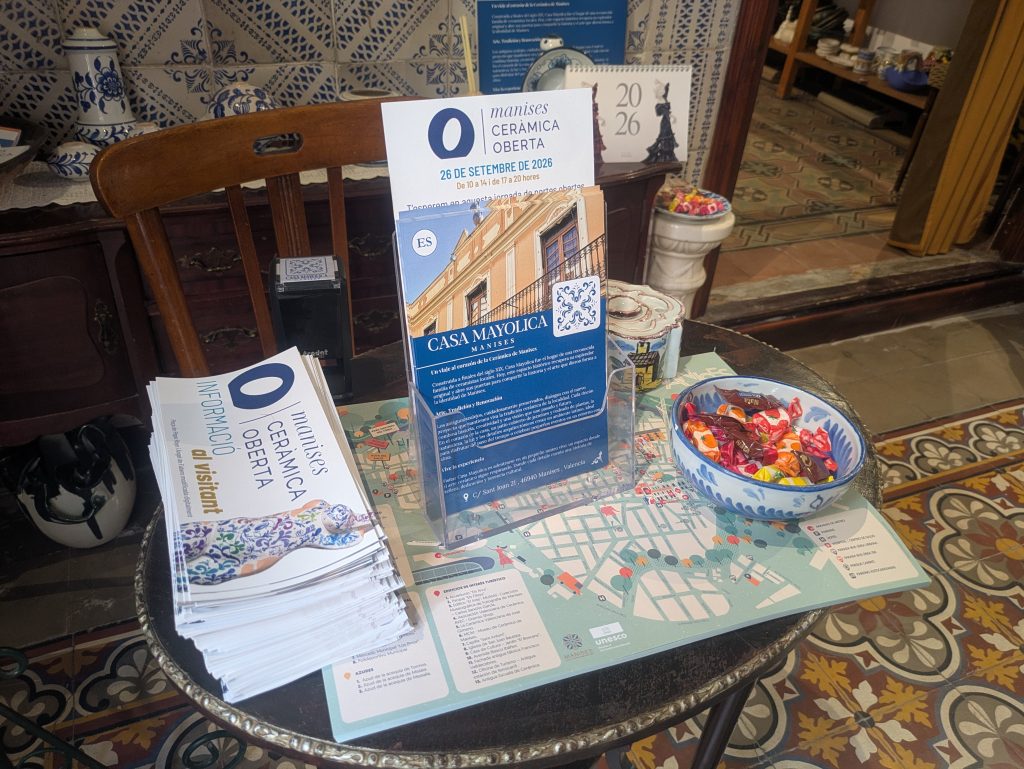
Welcome table at Casa Mayolica with Ceràmica Oberta 2026 brochures, a visitor map and a bowl of sweets, set against blue and white tiled walls
The welcome table, ready before the first group arrived

The little ceramic market did what markets dream of

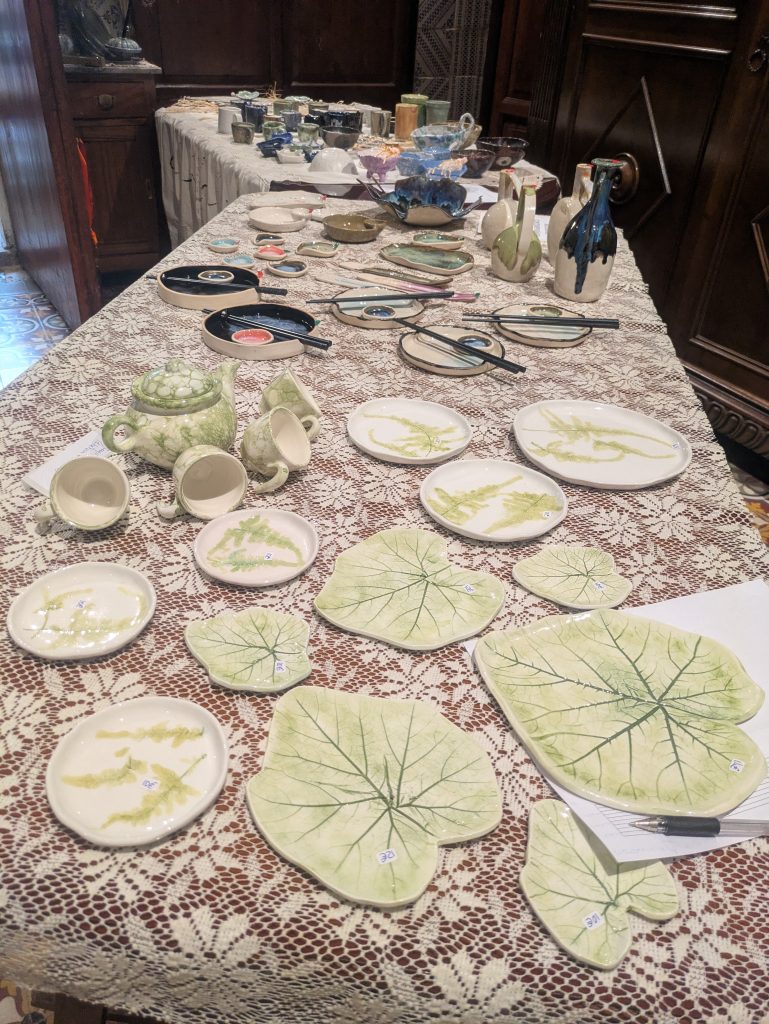
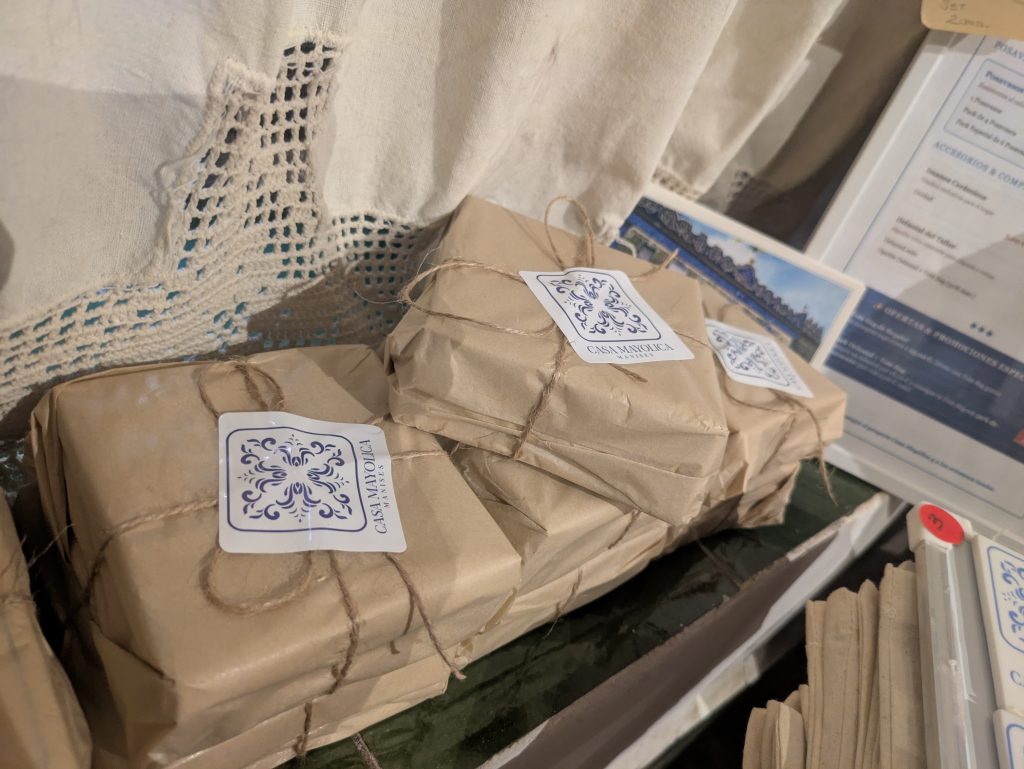
We’ll say it plainly: the market was a success. Shelves of Manises pottery, vintage pieces, small ceramic jewellery — and people buying, directly, without intermediaries, from a house that made ceramics for generations. Pieces left with new owners across the afternoon and evening. If you’ve read our Open House recap, you know our theory: people don’t only want to look at heritage, they want to take a piece of it home. Yesterday confirmed it again, at friendly prices.

Table with a white lace cloth displaying handmade ceramics for sale at the Casa Mayolica market: leaf-shaped plates, a green-motif teapot with cups, bowls and small dishes with price tags
The market table: leaf plates, a green teapot set, and honest prices
Small purchases from the Casa Mayolica ceramic market wrapped in brown kraft paper, tied with twine and sealed with Casa Mayolica Manises stickers
The best sight of the day: purchases wrapped and leaving with new owners

What the house does to people

With groups of fifteen, you notice things you miss in a crowd. The salon with the hand-painted panels stops people mid-sentence. The interior patio collects conversations the way it collects light. Someone always finds the detail we’ve stopped seeing — the sundial on the façade, the ceramic duck on the windowsill — and suddenly fifteen strangers are looking at it together.

A house like this was a working alfarería household for generations: clay, wheels, kilns, paint. For one day it belonged to whoever walked in. That’s the whole point of Ceràmica Oberta, and it’s our favourite day of the year for a reason.

Three honest takeaways

  1. The house handles visitors well. 150 people, two sessions, zero drama. A century and a half of family life turns out to be excellent training.
  2. Locals are the best surprise. Every time we open the doors, the visitors who seem most moved are Manises neighbours seeing their own city from a new angle.
  3. The route works. The tourist train, the passport of stamps, the workshops on Calle Torrent — the town has built something that moves people between kilns, studios and heritage houses all day. We’re lucky to be part of it.

If you missed it

The house opens again — for events, visits and the little ceramic market. See what’s coming on our public events page, read about the house, or contact us to arrange a visit outside event days. And if you came yesterday: thank you. The jasmine noticed the extra company.


Casa Mayolica — Carrer de Sant Joan, Manises, City of Ceramic Where history meets hospitality, and once a year, opens wide.

Internal links: /little-ceramic-market/ · /public-events/ · /about/ · Ceràmica Oberta 2026 page